
Where Mackinac County Crime News Appears
Go official first. The Mackinac County Sheriff's Office connects the public to Facebook posts, alerts, and a sheriff app. Those channels share agency news and community messages. What they do not offer is a daily crime blotter, a booking roster, a photo archive, or a booking feed. Treat an agency post as a way to pin down attribution and timing, not as proof of every arrest made.
Reporters fill in the rest, one event at a time. Coverage of St. Ignace shows up in regional outlets. Bridge incidents tend to pull in Michigan State Police. Township stories may surface through Upper Peninsula newsrooms. Mackinac Island has a police contact, though no verified daily local blotter exists there either. The landscape is event-driven rather than a searchable list of who was booked in Mackinac County Jail.
Whenever a story names an agency, use it. A reporter might quote a sheriff release, sum up MSP information, or describe someone lodged after an arrest. Each piece is different. None of it replaces the court record that follows.
Mackinac County News Outlet Patterns
The table splits things in two. Official starting points sit on one side. Coverage outlets sit on the other. Its photo column lists only what the sources themselves support, and stories can change after they are linked. One image does not mean the county publishes photos as routine practice.
| Outlet | Coverage | Photos? | Where |
|---|---|---|---|
| Mackinac County Sheriff’s Office | Agency contacts, public-safety information, linked social and app channels | No verified public roster or photo feed | Official sheriff page |
| WNBY / Newberry | Recurring sheriff activity reports and county events | Reviewed activity report had counts and lodging, not names or photos | WNBY News |
| SooLeader | Eastern Upper Peninsula and St. Ignace events | Agency-image context varies by story | Crime section |
| Upper Michigan’s Source / WILX | Selected bridge, sheriff, or MSP events | Some stories explicitly label agency-supplied images | Upper Michigan’s Source / WILX example |
| Iron Mountain Daily News | Eastern Upper Peninsula incidents and later court developments | Do not relabel an unidentified image as a mugshot | Local news |
| My Newberry News / WNMU | Township incidents, press releases, and text reporting | Reviewed WNMU coverage was text-based; identity may be withheld | My Newberry News example / WNMU example |
| St. Ignace News / Mining Journal | Weekly local lead and event-driven St. Ignace coverage | No verified searchable crime or mugshot cadence | St. Ignace News / Mining Journal example |
Outlets report. They do not keep custody databases. A missing story proves nothing about whether an arrest happened, and an arrest story proves nothing about whether someone stayed in jail. Check the named agency first, then the court record, before calling any report current.
Agency Images in Mackinac Crime News
Labels on images matter. A local story might run a handout portrait, a scene photo, a booking image obtained through records work, or a picture supplied by the arresting agency. The Upper Michigan's Source examples credit selected images directly to Michigan State Police or the Mackinac County Sheriff's Office. WILX went the same route. It labeled a bridge-event photo as courtesy of MSP. Such credits tell you who supplied that picture for that story. They do not turn a news outlet into a county photo archive.
Plenty of articles name no one and label nothing. Iron Mountain Daily News coverage of a county incident is a good example; it should not become a mugshot claim the source never made. My Newberry News and WNMU show a different local habit. A press release or text report gives the incident facts. It withholds a name before arraignment, or runs no image at all.
Source and attribution note: Repeat the outlet's own label, such as "courtesy of MSP" or "provided by the sheriff," rather than calling every arrest-related image a mugshot.
Mackinac County Weekly Activity Reports
WNBY's sheriff activity reports offer the one clear recurring rhythm in county news. One reviewed report covered July 19 through 25, 2026. It went up July 27. The report noted two subjects booked and lodged at Mackinac County Jail. That is a period summary, not a same-day roster. It gives no name-and-photo feed, and it cannot say who stayed in custody once the week closed.
A captured view of the WNBY news page shows the context where those activity summaries appear.
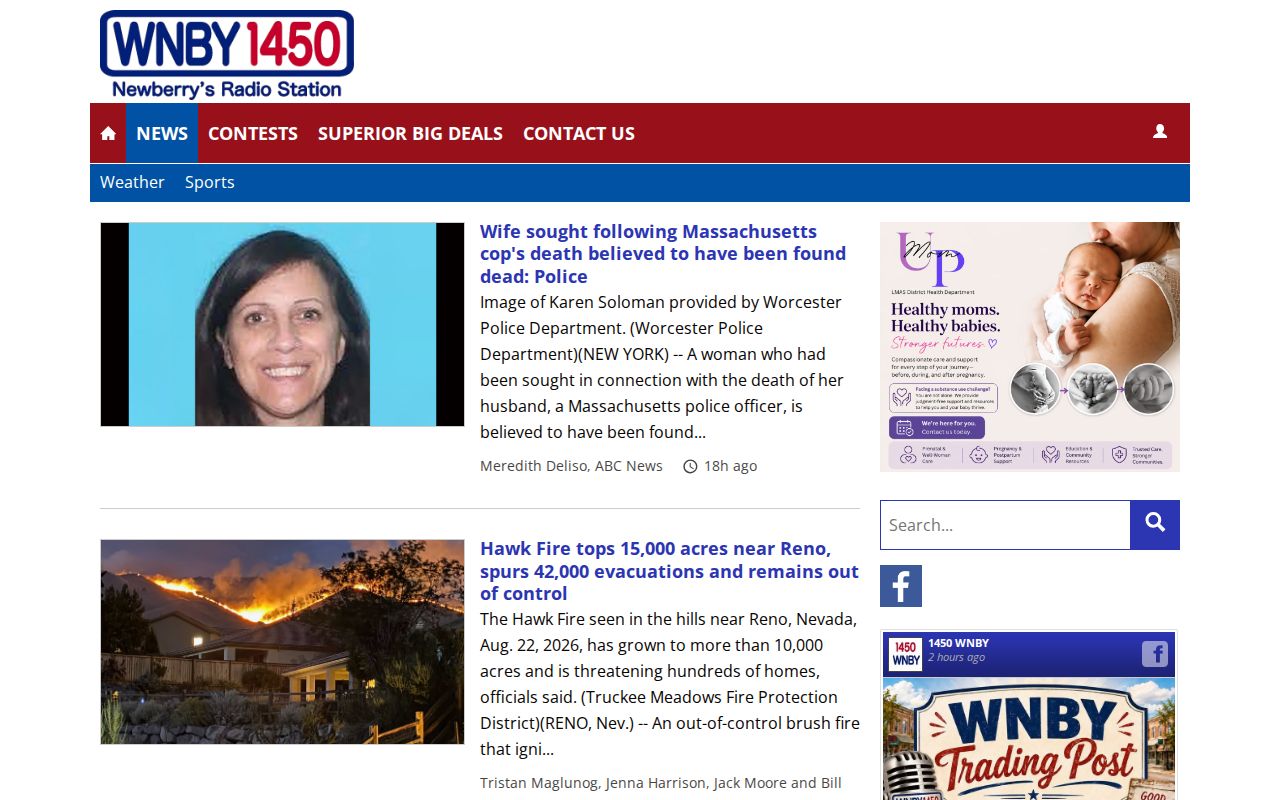
Weekly activity reports cover dated news events. That is all they do. They are not a booking list, and they will not say who sits in the county jail right now. Think of them as headlines with timestamps, not custody records.
Timing is the real trap. A bridge traffic stop might hit the news within hours of a state police release. A township investigation can surface days later, or with names held back until arraignment. So pull each story apart when you check it. Put the incident date, the publish date, the agency named, and the lodging language on separate lines. Add the court reference and photo credit there too. Each of those facts answers a different question.
The county's official sheriff and jail pages publish no booking log. There is no current roster. No update schedule is stated anywhere, and no archive of past activity exists either. Treat every weekly report or social post as one slice of the picture. None of them is the whole accounting.
News timing gets even trickier after bond or a court appearance. A story can run long after the person has already left the jail. A court case file may land later than the article did. The county has no official same-day feed and no published photo policy. That leaves the jail phone line as the reliable way to confirm a record that never made it online.
From a Mackinac Story to Records
A news story can open the door to a records search. Start with the agency. Was it the Mackinac County Sheriff’s Office, a city police department, or Michigan State Police? That detail shapes where you look next. Being lodged at one point says little about present custody either. Mackinac County posts no verified public jail roster. The sure route is a direct call to the jail or the arresting agency, followed by a focused records request.
- Save the story’s title, publication date, incident date, agency attribution, and any stated court or jail reference.
- Confirm the arresting agency. A St. Ignace matter may start with city police, while a bridge event may originate with MSP and later involve county lodging.
- For a current county-custody question, contact the jail or sheriff through the county booking and custody channels. Ask which office holds the requested public record.
- For a booking document or arrest report that is not posted, direct a focused Michigan FOIA request to the agency that created or maintains the record.
- Check the case through the 92nd District Court and MiCOURT, then use the circuit-court path where a felony case proceeds. Look for the later court event, not just the original charge.
An arrest, a booking, a lodging, and an arraignment each mark a separate stage. Treat them as steps in a sequence rather than a single event.
Mackinac County Court Records After News
Court files tell you what the first news story left out. The 92nd District Court handles arraignments, bail, misdemeanors, and felony preliminary examinations. Its official page links to MiCOURT for an online docket search. Felonies move to Mackinac County Circuit Court after transfer. A docket can show a hearing, a bond condition, a plea, a dismissal, or sentencing that never made the initial report.
One moment is all a reporter usually captures. A SooLeader St. Ignace piece might trace an arrest from jail lodging to arraignment and release. Yet it still cannot deliver the final outcome. Pull the case number. Name the court. Check the record directly. If nothing surfaces, consider a spelling variation, a filing delay, a protected matter, or a citation handled on a different track.
For city-level context, the St. Ignace Busted Mugshots route separates city police information from county detention. The same habit works countywide: state the agency’s facts, keep the source’s image label intact, and let the court record answer what happened next.
Mackinac County Custody in News
“Arrested,” “lodged,” and “released” sit at different points in a case. Lodged means the report placed a person in Mackinac County Jail at a given time. It says nothing about whether they are still there. A release is another custody event, not a result. Arraignment or a preliminary examination may still follow.
More than one system can be involved. City police, the county sheriff, MSP, or a federal authority might make the arrest, and custody may not end up at the county jail at all. The Michigan Department of Corrections, federal systems, and local jail records track different populations. Never merge them into one list off a local article.
Quote a custody fact with its source and date. When the story is silent, skip the roster claim entirely. That habit keeps reporting honest and leaves confirmation with the agency, jail, and court.